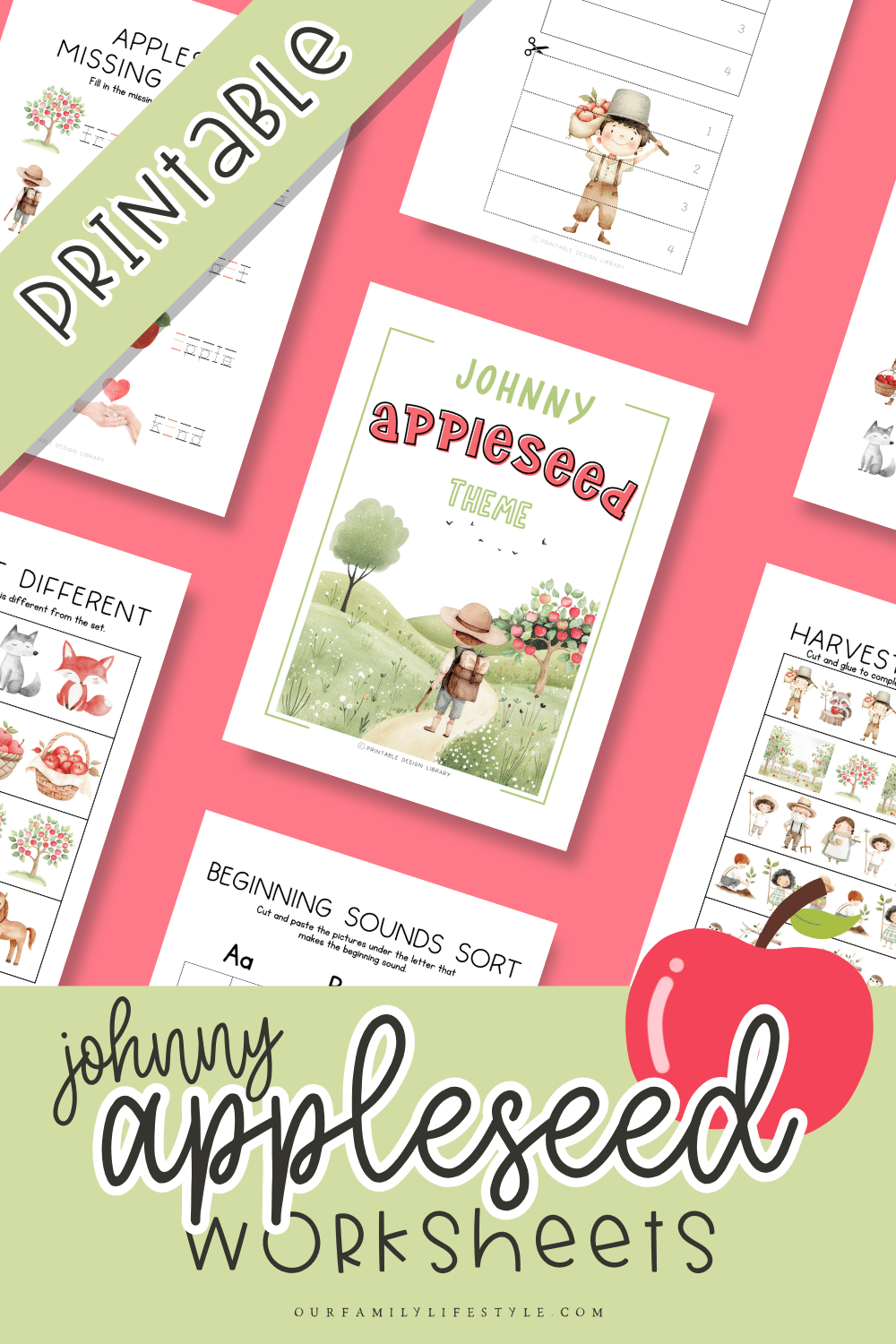


Children love stories, and few tales are as wholesome and inspiring as the legend of Johnny Appleseed. Teachers and parents often use his story to introduce lessons about kindness, nature, and growth.
For early learners, worksheets inspired by Johnny Appleseed provide a wonderful way to blend history, literacy, math, and creativity into one engaging experience.
By incorporating Johnny Appleseed worksheets into your early learning classroom or home routine, you give children hands-on opportunities to practice essential skills while learning about an American folk hero.
TL;DR
Fun + Educational
Blend literacy, math, creativity, and character-building with Johnny Appleseed’s story.
Complete Unit
Pair with books, songs, and crafts for an engaging early learning experience.
Activity Variety:
Includes coloring pages, tracing, counting games, letter recognition, and story sequencing.
Lasting Impact
Teaches kindness, nature appreciation, and growth through play-based learning
Who Was Johnny Appleseed?
Johnny Appleseed, whose real name was John Chapman, was a pioneer nurseryman born in 1774. He became famous for traveling across parts of Pennsylvania, Ohio, and Indiana, planting apple seeds and spreading messages of kindness and conservation.
To young children, Johnny Appleseed is remembered as a gentle man with a cooking pot on his head, carrying a bag of seeds. His story offers an ideal foundation for lessons about gratitude, generosity, and the importance of caring for nature.
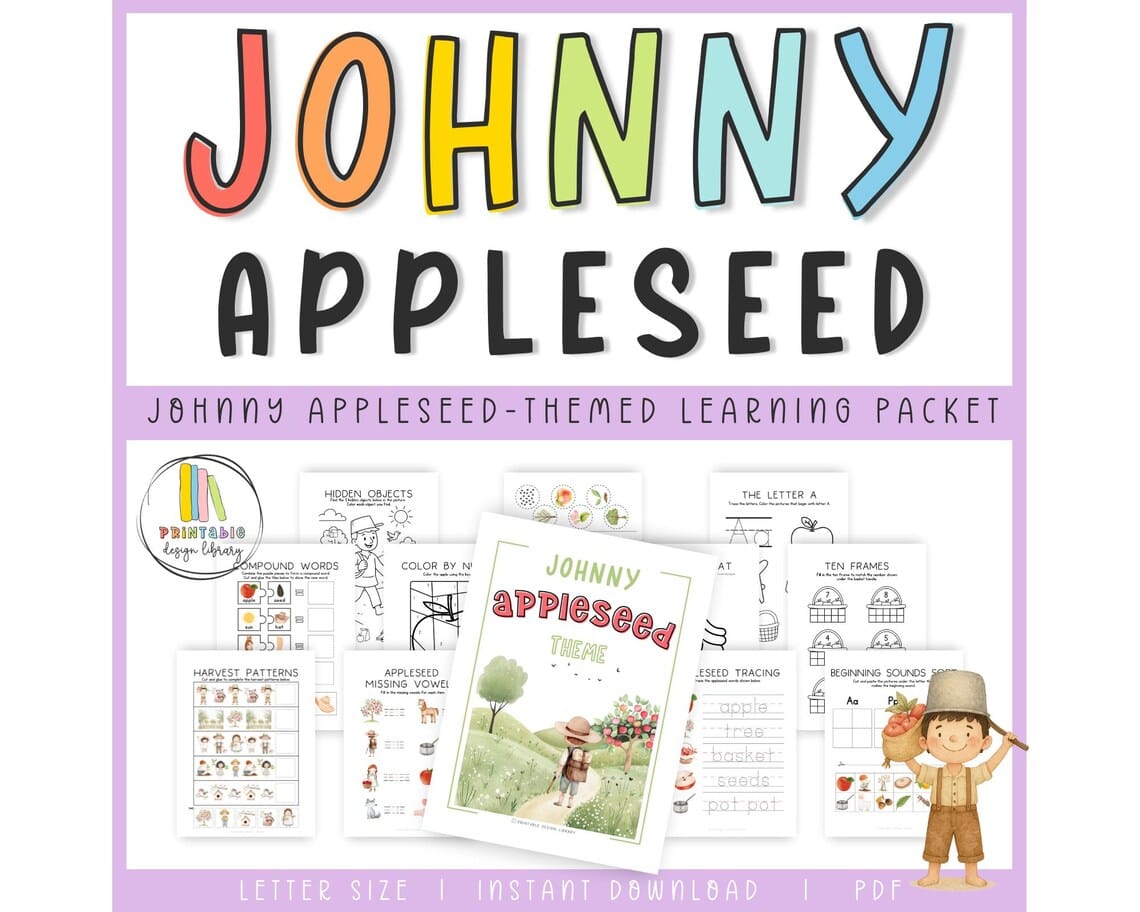
Johnny Appleseed Preschool Packet
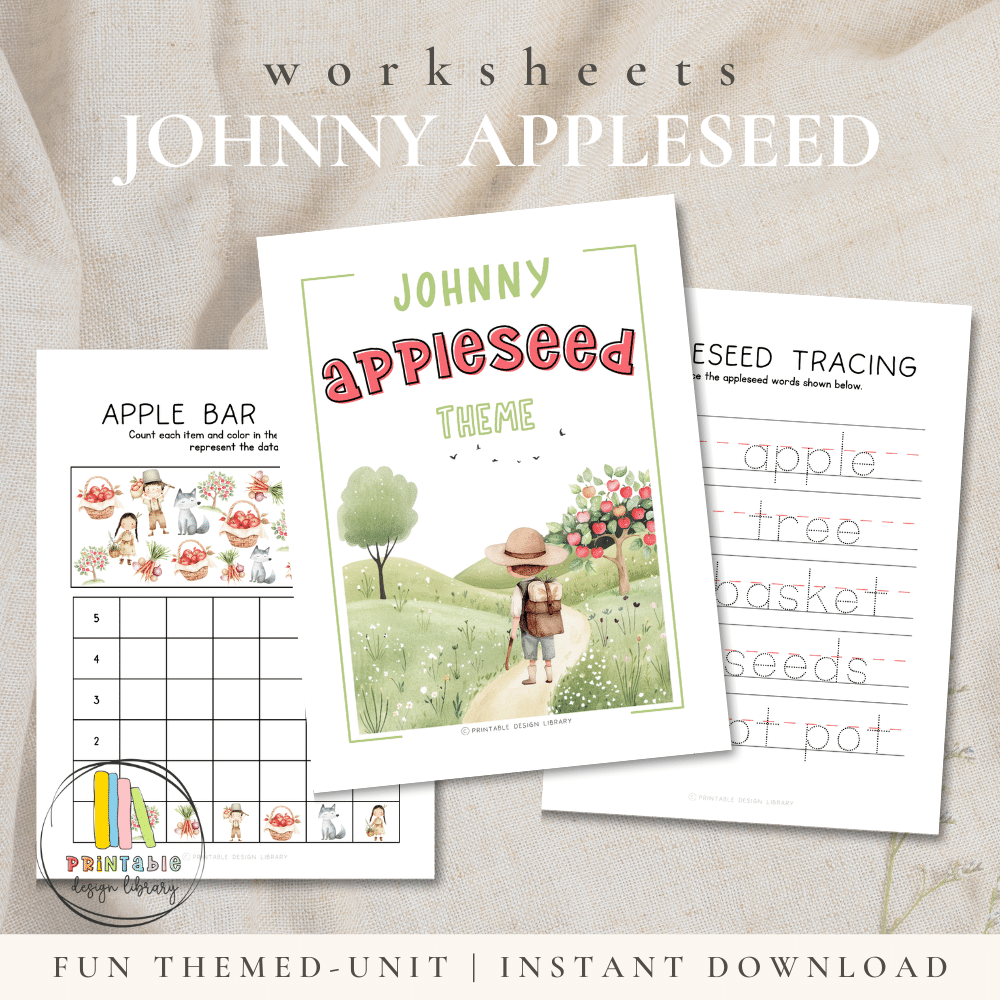
This Johnny Appleseed-Themed Preschool Packet introduces children to the classic American folk hero through soft watercolor illustrations and engaging early learning activities.
Why Johnny Appleseed Matters in Early Learning
In early education, children thrive when learning is tied to memorable stories. Johnny Appleseed’s tale connects history, agriculture, and character-building themes, making it perfect for preschool and kindergarten activities. Worksheets based on his life help children:
- Strengthen their literacy and comprehension skills.
- Develop fine motor control through tracing, coloring, and cutting.
- Build math readiness with counting and sorting activities.
- Engage in creative storytelling and sequencing exercises.
Benefits of Using Worksheets in Early Childhood Education
Enhancing Literacy and Reading Skills
Worksheets with alphabet tracing, letter recognition, and vocabulary activities encourage children to connect sounds with written words. For instance, “A is for Apple” worksheets link literacy with Johnny Appleseed’s story.
Building Fine Motor Skills Through Tracing and Coloring
Tracing lines, drawing apple shapes, and coloring Johnny Appleseed-themed pictures help children develop strong hand muscles for writing.
Encouraging Creativity and Storytelling
Story sequencing worksheets allow kids to retell Johnny Appleseed’s journey in their own words, enhancing memory and language skills.
Types of Johnny Appleseed Worksheets
Coloring Pages and Tracing Activities
Simple images of Johnny Appleseed, apple trees, and baskets of apples give young learners fun opportunities to practice coloring inside lines.
Matching and Sorting Games
Worksheets that ask kids to match apple seeds to trees or sort apples by size or color build critical thinking and categorization skills.
Counting and Number Worksheets
Early math worksheets may include counting apples, connecting numbers with apple baskets, or filling in missing numbers on an orchard-themed chart.
Letter Recognition and Early Writing Worksheets
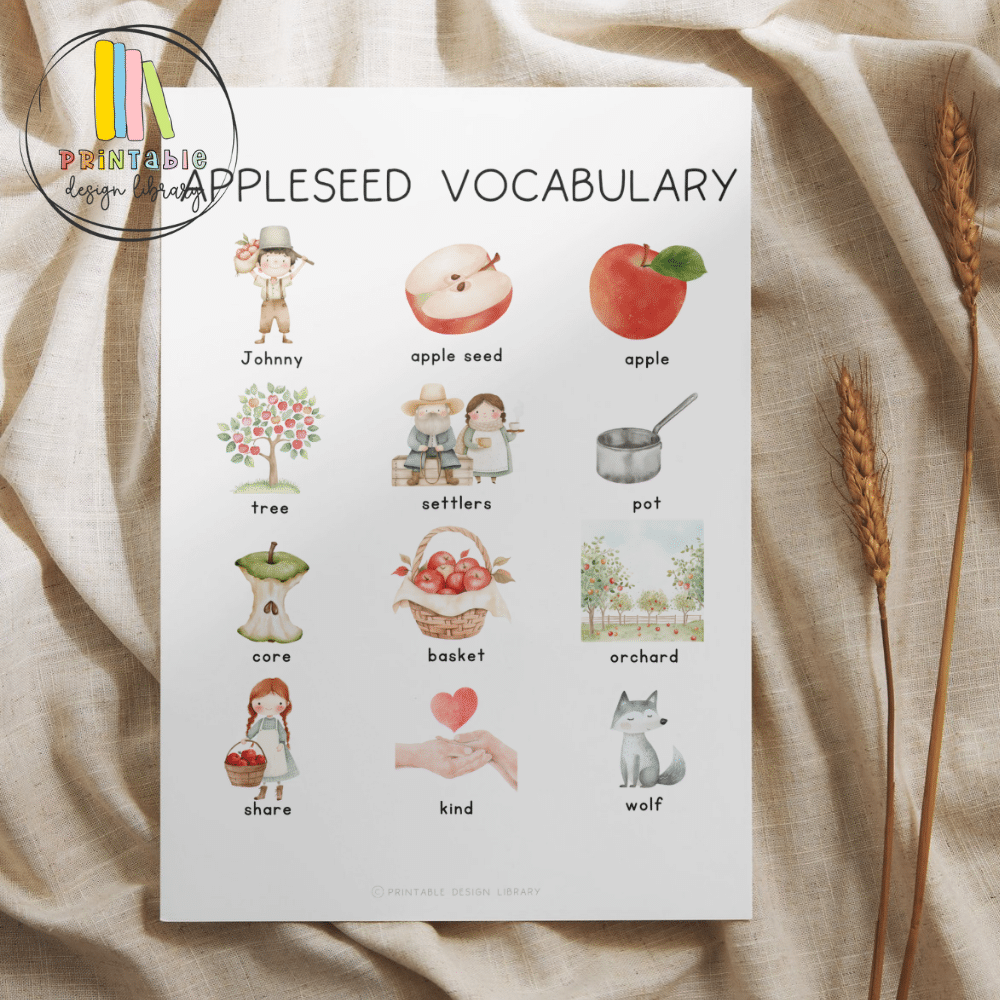
Children can trace and write letters while associating them with apple-themed words such as “tree,” “seed,” and “apple.”
Story Comprehension and Sequencing Activities
Sequencing worksheets help children arrange pictures in the correct order to retell Johnny Appleseed’s adventures.
How to Incorporate Johnny Appleseed Worksheets in the Classroom
Morning Circle Time Activities
Start the day by reading a short picture book about Johnny Appleseed. Then, use worksheets to reinforce the story. For example, children can complete a “color by number” apple page while discussing the lesson’s theme of kindness. This sets a positive tone for the rest of the day.
Small Group Learning Centers
Divide the class into centers—literacy, math, and art—and provide worksheets suited for each group. One group might trace letters, another might count apples, and a third could color apple orchard scenes. This approach encourages collaboration while catering to different learning levels.
Hands-On Apple-Themed Projects
Pair worksheets with hands-on apple activities such as taste-testing different apple varieties, making apple prints with paint, or planting apple seeds in cups. By combining tactile projects with worksheets, children strengthen their understanding through multiple senses.
Printable vs. Digital Johnny Appleseed Worksheets
Advantages of Printable Worksheets
- Easy to use with crayons, markers, or pencils.
- Encourage hands-on writing, cutting, and coloring.
- Can be sent home for parent-child activities.
Advantages of Digital Worksheets
- Perfect for classrooms with tablets or smartboards.
- Interactive features like drag-and-drop matching games keep children engaged.
- Environmentally friendly and reusable.
Best Practices for Blended Learning
Many teachers now use a mix of printable and digital worksheets. For example, children can color apple orchards on paper while using an iPad app to count digital apples. This blended approach provides balance and variety.
Creating a Johnny Appleseed Unit Plan
Recommended Children’s Books on Johnny Appleseed
- Johnny Appleseed by Steven Kellogg (a classic picture book with vivid illustrations).
- Seed by Seed: The Legend and Legacy of John “Appleseed” Chapman by Esmé Raji Codell.
- The Story of Johnny Appleseed by Aliki.
Combining Worksheets with Storybooks
Storybooks such as Johnny Appleseed: My Story by David L. Harrison or Johnny Appleseed by Reeve Lindbergh are excellent companions to worksheets. After reading, children can complete sequencing pages to recall events from the story.
Pairing these books with worksheets deepens comprehension and brings the legend to life.
Adding Music, Crafts, and Songs
Incorporate folk songs like “The Johnny Appleseed Grace” to bring rhythm into learning. Pair them with craft worksheets—such as making apple crowns or creating paper apple trees. Music and art help reinforce key concepts while keeping children entertained.
Celebrating Johnny Appleseed Day (September 26th)
Many schools celebrate Johnny Appleseed Day with themed activities. Teachers can plan an entire day of worksheet stations, apple snacks, and storytelling circles. This celebration makes the worksheets feel less like “work” and more like an exciting tradition.
Tips for Parents Using Worksheets at Home
Making Learning Fun and Stress-Free
Parents should approach worksheets as playful activities, not drills. For example, sit with your child and color apple baskets together while talking about healthy foods.
Balancing Worksheets with Play-Based Learning
Children learn best when worksheets are combined with active play. Try using a worksheet about counting apples and then count real apples during snack time.
Encouraging Daily Storytelling and Reflection
After completing a worksheet, ask your child to retell Johnny Appleseed’s story in their own words. This builds language skills and boosts confidence.
Common Mistakes to Avoid with Worksheets
Overloading Kids with Too Many Pages
Young learners have short attention spans. Instead of assigning 10 worksheets, focus on 1–2 meaningful activities.
Lack of Interactive Elements
Worksheets should encourage coloring, cutting, matching, and drawing—not just filling in blanks. This keeps kids engaged.
Ignoring the Child’s Learning Style
Some children learn better through movement, others through visuals. Adapt worksheets to match each child’s needs—for example, turning a worksheet into a cut-and-paste activity for kinesthetic learners.
FAQs About Johnny Appleseed
What age group are Johnny Appleseed worksheets best suited for?
They’re ideal for preschoolers, kindergarteners, and first graders (ages 3–7). Can worksheets teach both literacy and math skills?
Yes! Worksheets can cover letter tracing, counting apples, sequencing events, and even simple addition. How do Johnny Appleseed worksheets connect to social-emotional learning?
They promote values like kindness, generosity, and caring for nature—core lessons from Johnny Appleseed’s story. Are digital worksheets as effective as printable ones?
Both are effective. Printables strengthen fine motor skills, while digital worksheets offer interactive elements. A blended approach works best. How can I make worksheets more engaging for my child?
Add movement (e.g., apple scavenger hunts), crafts, or storytelling alongside the worksheets. This keeps learning fun and memorable.
Conclusion: Inspiring Little Learners with Johnny Appleseed Worksheets
The story of Johnny Appleseed has inspired generations, and with Johnny Appleseed worksheets, teachers and parents can bring this legend into the classroom and home in a meaningful, interactive way. These worksheets combine literacy, math, creativity, and character education, making them an essential resource for early learners.
Whether you’re a teacher planning a Johnny Appleseed Day celebration or a parent looking for fun weekend activities, worksheets offer a simple yet powerful way to engage children while teaching them life lessons about kindness, nature, and perseverance.
By blending worksheets, books, songs, and crafts, you create a learning environment where children not only remember Johnny Appleseed’s story but also carry his values into their own lives.