
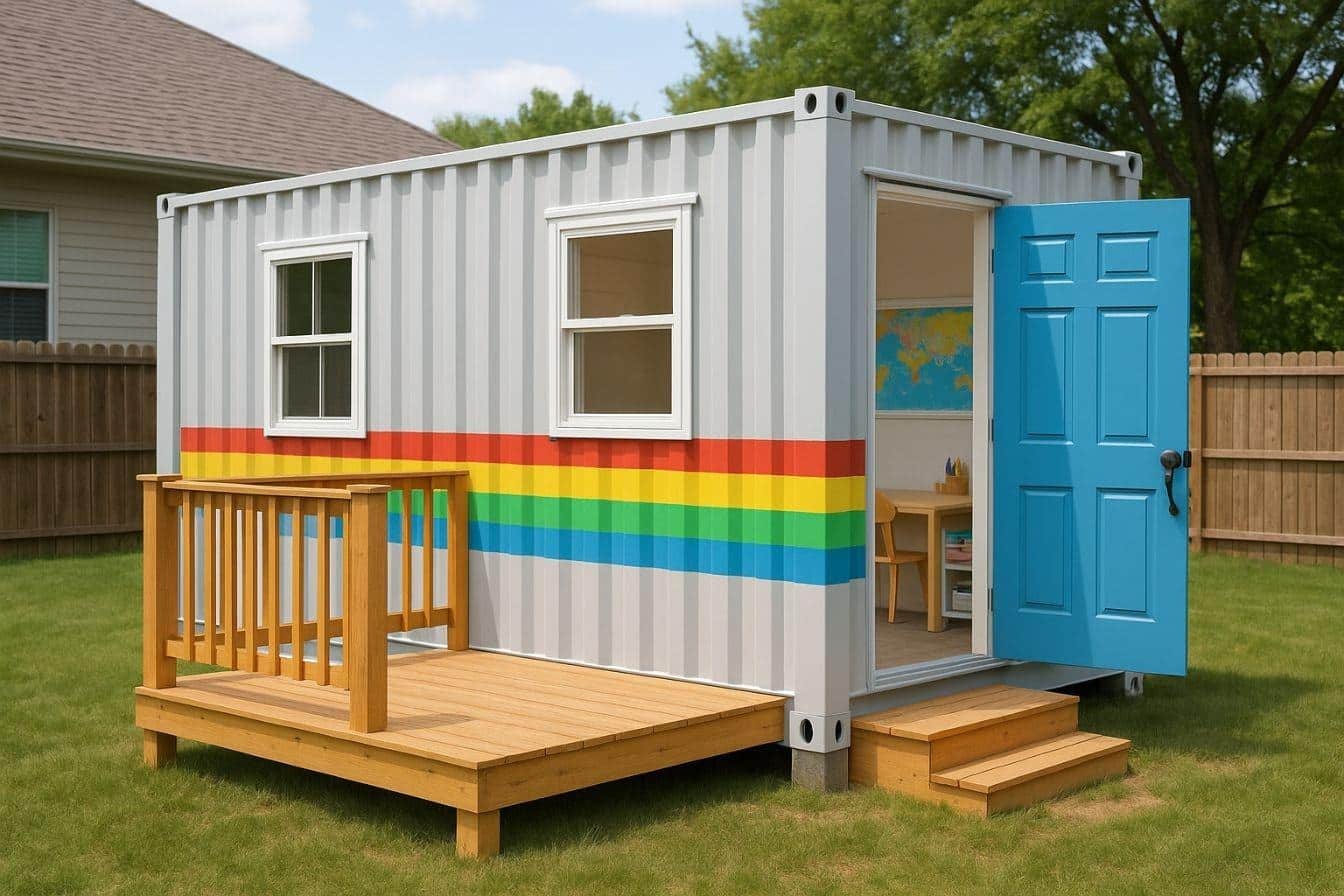
A backyard playhouse gives kids their own space to play, imagine, and learn. It can be a mini home, a creative studio, or even a quiet place for homeschool lessons. When you start with a shipping container, you get a strong, weatherproof structure that’s quick to set up and built to last.
Unlike wood sheds or plastic playhouses, a container is secure, low maintenance, and easy to customize. It can grow with your family as your needs change, from a fun play space to a learning hub or art studio.

Why a Shipping Container Makes the Perfect Base
A shipping container is one of the most versatile structures you can use for a backyard project. It is solid steel, wind- and water-tight, and built to handle heavy use. Containers are also eco-friendly because they repurpose something that might otherwise sit unused in a yard or port.
Another advantage is affordability. You can often find a one-trip or used container for less than the cost of building a wooden playhouse from scratch. It already has walls, a floor, and a roof, so you can focus your budget on making the interior fun and functional.
Containers come in standard sizes such as 20ft and 40ft. A 20ft container usually fits best in most yards and offers plenty of space for a play area, storage, and even a small learning nook. Most companies offer easy shipping container delivery.
Planning the Layout
Before you start building, decide how you want the playhouse to feel. Do you want a castle, a fort, a cozy cottage, or a classroom? The theme will help guide your layout and decorations.
Inside, divide the space into clear zones. You might have a small reading corner, an art station, and a flexible play zone in the middle. If you have space outdoors, consider adding a small porch or deck that connects to the container. That gives kids a safe way to play outside while staying near the main structure.
Measure carefully and keep child safety in mind. Avoid high shelves or tall ladders inside. Add easy access points such as a short set of steps or a ramp. Keep pathways clear so kids can move safely from one side to the other.
Essential Modifications
To make your container feel more like a fun clubhouse than a steel box, start with a few key upgrades. Add windows on both sides to let in sunlight and create airflow. Choose a solid man door or a sliding glass door for easy access. If you plan to use it year-round, add insulation and paint the interior a light color to keep it cool in summer and warm in winter.
A bright exterior color can also transform the look. Blues, greens, and whites create a cheerful style that blends into most yards. Inside, install durable flooring such as vinyl planks or foam mats. You can also add electrical outlets and lighting, but it’s best to hire a licensed electrician for safety.
Designing for Play and Imagination
This is where the fun begins. Think about what your kids love most. A chalkboard wall can turn one side into an art zone. A play kitchen or small tool bench can spark imagination. You can build a loft with a short ladder for extra excitement if ceiling height allows.
Lighting makes a big difference too. String lights or battery-powered lanterns give the space a magical glow. Paint murals of trees, mountains, or stars on the walls to make it feel like another world. If you want to extend the fun outside, create a sandbox, mini garden, or swing set next to the container. The combination of indoor and outdoor play areas will keep kids busy for hours.
Turning Part of It into a Homeschool Classroom
A container playhouse can also serve as a small homeschool or study space. This gives your child a separate place to focus while keeping the main house quiet.
Start by adding a simple desk or fold-down table, shelves for books and art supplies, and a whiteboard for lessons. Use bright lighting and light colors on the walls to make the space inviting. If the container has windows, add shades or curtains to control glare.
Temperature control matters too. Add a small portable heater or fan as needed, and use insulation to maintain comfort year-round. If your Wi-Fi doesn’t reach the yard, use a signal extender so online classes run smoothly.
Decorate the classroom section with motivational posters, plants, and artwork. Having a space dedicated to learning helps your child feel organized and confident.
Safety and Comfort Features
A playhouse should always feel safe and cozy. Start with ventilation. Even with windows, you may want a small vent or fan near the roof to keep air fresh.
Use child-safe materials and paints that have no strong odors or toxins. Cover sharp corners with soft guards, and make sure all flooring is non-slip. Inside wiring and electrical boxes should be covered or placed out of reach.
If you leave the container unlocked, add a door stop or soft-close hinge to prevent fingers from getting caught. On warm days, check temperatures inside the container before kids play to ensure it stays comfortable.
Decorating and Adding Personal Touches
Let your kids help design their own playhouse. Give them a few color choices or themes to pick from. Hang up their drawings, string fairy lights, and let them choose fun décor like bean bag chairs or rugs.
Small details make a big difference. You can add a sign over the door that says “Clubhouse,” “Schoolhouse,” or the kids’ names. Install a kids-only doorbell or mailbox for letters and notes.
Make it easy to decorate for holidays or birthdays too. Hang twinkle lights in December or set up a mini pumpkin display in the fall. Seasonal updates keep the space exciting all year long.
Expanding the Space Over Time
As your family grows, the container playhouse can grow with it. You can connect two containers side by side or add a roofed walkway between them. The original playhouse might become a teen hangout spot, guest room, or art studio later on.
Adding a second unit also lets you separate play and learning areas. One container can hold toys and crafts while the other serves as a classroom or quiet reading space. Because containers like the ones at Dry Box are modular, these upgrades are easier than traditional remodeling projects.
Over time, the investment pays off. The playhouse adds long-term value to your property and gives your family a flexible structure that adapts to new uses.
Creating a Long Lasting Space
Building a backyard playhouse from a shipping container is one of the most creative and practical projects you can take on as a parent. It offers a strong, secure base that’s easy to personalize and expand. You can start small with a simple play space and later turn it into a homeschool classroom, art studio, or reading retreat.
Every project begins with imagination. By combining play and purpose, you give your kids a place that encourages learning, creativity, and independence. Start planning your container playhouse today, and you’ll soon have the ultimate backyard hideaway that your family will treasure for years to come.