
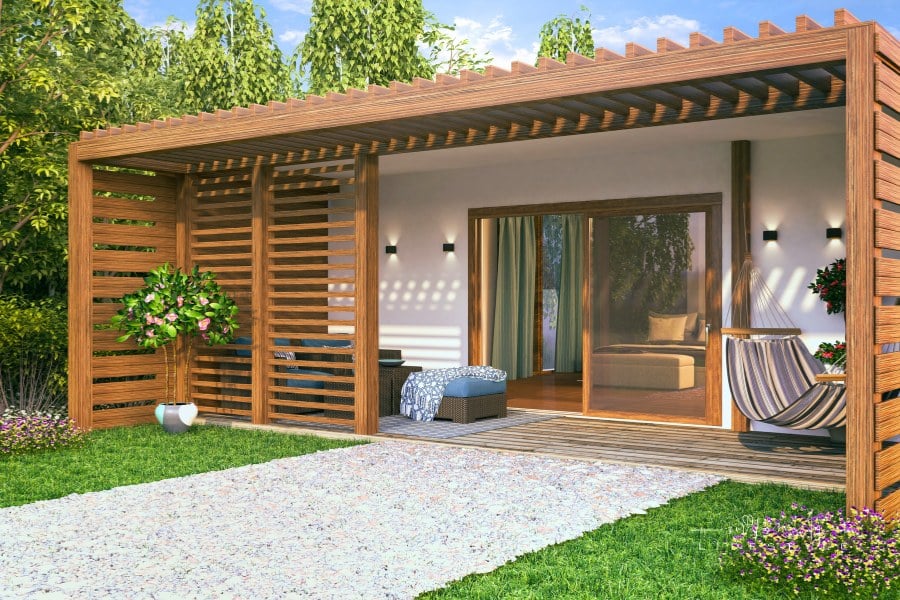
Building a home once meant months of site carpentry, unpredictable workmanship, and relentless weather delays. Today’s kit‑home movement rewrites that script.
Manufacturers now laser‑cut steel, timber, or SIP components in climate‑controlled factories, bundle them into compact shipments, and assemble on‑site like life‑size LEGO sets.
The result is faster occupancy, tighter energy performance, and cost transparency that conventional builders rarely match.
Yet durability remains paramount: bushfires, hurricanes, termites, and soaring energy prices test every structure.
The following comparison focuses on four proven providers whose kits have demonstrated long‑term strength, safety, and sustainability across multiple climates.
Wide Span Homes – Australian Steel Strength
Brisbane‑based Wide Span Homes fabricates every frame from TRUECORE® BlueScope steel, a galvanised alloy engineered to resist termites, bushfire embers, and corrosion, and backed by an up to twenty‑year structural warranty.
Precision‑cut wall panels, rafters, and purlins arrive numbered for bolt‑together assembly, eliminating wet trades and ensuring dimensional accuracy even on remote rural blocks. Kit homes Australia and the freedom they offer seem to be the right combination.
Design & Customisation
The catalogue ranges from compact two‑bedroom cabins to expansive four‑bedroom estates; each floor plan can be stretched, mirrored, or wrapped with verandas thanks to the flexible post‑and‑beam core.
Owners choose cladding, roofing profiles, and interior finishes locally, keeping supply chains short while preserving the engineered envelope’s integrity.
Optional bushfire‑attack‑level upgrades swap standard Colorbond panels for insulated, non‑combustible sheeting, giving peace of mind in high‑risk zones.
Cost, Build Timeline & Durability
Entry‑level shells start around AUD 90,000 and climb beyond AUD 220,000 for multi‑wing homesteads, excluding fit‑out and earthworks.
With footings ready, frames typically stand in under ten days, and total turnkey completion averages sixteen weeks—half the schedule of conventional builds.
Steel’s dimensional stability prevents warping, while high‑tensile roof sheeting is certified for cyclone categories up to C2, ensuring decades of low‑maintenance performance across Australia’s harshest environments.
Mighty Small Homes – North American Sip Efficiency
Kentucky‑based Mighty Small Homes supplies Structural Insulated Panel (SIP) kits whose foam‑core walls provide R‑25 insulation and reduce air leakage below 1.0 ACH, making the envelope three times tighter than typical stick‑built construction.
Computer‑numeric‑control (CNC) routers mill every opening to the millimetre, and panels interlock without conventional studs, yielding a shell that is simultaneously lighter and stronger.
Design & Customisation
Models span 600‑to‑1,400 sq ft footprints with shed, gable, or modern mono‑pitch roofs. A drag‑and‑drop online configurator lets buyers alter glazing sizes, reposition doors, or add full‑length lofts.
Because SIP panels bear their own loads, interiors remain open span, allowing future partitions or renovations without structural compromise .
Cost, Build Timeline & Durability
A typical 1,000 sq ft shell ships for roughly USD 67,000; Mighty Small estimates finished costs of USD 160–190 per sq ft once local labour is included.
On‑site framing can complete in four days, shrinking construction loan interest and almost eradicating weather delays.
Rigid foam insulation eliminates thermal bridges, while borate‑treated oriented‑strand‑board skins deter insects and mold.
Together these features deliver energy bills up to 60 % lower than code‑minimum homes and structural lifespans surpassing sixty years with minimal maintenance.
Huf haus – German Glass & Timber Precision
Huf Haus pioneers post‑and‑beam timber architecture married to triple‑glazed curtain walls. Glue‑laminated spruce columns slot into concealed stainless connectors, creating earthquake‑resistant frames that attain Passive House‑class airtightness; broad roof overhangs protect wood from UV and rain .
Design & Customisation
Each commission is bespoke: engineers simulate daylight paths, energy loads, and landscape sight‑lines before production.
Floor‑to‑ceiling glazing dissolves boundaries between inside and nature, while integrated aluminium venetians and heat‑recovery ventilation control glare and preserve comfort.
Clients choose timber tones, façade colours, smart‑home packages, and even prefabricated basements produced in the same factory, ensuring seamless integration.
Cost, Build Timeline & Durability
Turn‑key packages begin near GBP 2,800 per m²—a premium reflecting German craftsmanship and rigorous quality checks.
After delivery, cranes erect the structural shell in as little as four days; Huf’s own finishing crews typically hand over the keys within twenty‑two weeks.
All timber is PEFC‑certified, kiln‑dried to below twelve‑percent moisture, and sealed with industrial lacquers that require only decennial refreshing.
Combined with aluminium‑clad frame edges, these measures allow Huf Haus exteriors to retain structural and visual integrity for generations.
Deltec Homes – Circular Storm Resilience
Deltec’s patented radial truss system forms self‑supporting rings that distribute wind loads evenly, giving their round houses a documented 99.9 percent survival rate through major US hurricanes.
Panels are fabricated from dense southern yellow pine sourced from FSC‑certified forests, and shells can be ordered Net‑Zero Ready with pre‑installed airtight membranes and service chases.
Design & Customisation
Base diameters span twenty‑to‑eighty feet, and owners may splice connector wings, stack additional storeys, or insert panoramic window walls for 360‑degree views.
The circular footprint reduces exterior surface area, enhancing thermal efficiency while creating an unmistakable architectural statement. Interior partitions remain non‑load‑bearing, facilitating future reconfigurations as family needs evolve.
Cost, Build Timeline & Durability
Current shell pricing starts at approximately USD 120,000, with complete build estimates averaging USD 250–300 per sq ft once finishes and utilities are included.
Assembly crews can weather‑tight the shell in seven days, and many clients occupy within six months, even on remote coastal lots .
The compression‑ring roof withstands uplift forces exceeding 185 mph, and optional pier foundations mitigate storm surge risk.
High‑density cellulose insulation, low‑VOC interior finishes, and factory‑applied borate treatment collectively promise a healthy indoor environment and a lifespan well beyond the conventional mortgage horizon.
Endnote
Steel, SIP, timber‑glass, and circular systems prove that prefabrication equals true performance.
Wide Span delivers fire‑hardy frames for Australia’s outback; Mighty Small slashes energy bills for value‑driven Americans; Huf Haus blends transparent aesthetics with German engineering discipline; and Deltec turns hurricane resilience into an art form.
Choose the kit that mirrors your climate challenges, design ambitions, and budget constraints, and durability will follow into life.