


Did you know, according to a national survey, that becoming a veterinarian is the number one career choice of tweens and teens?
Basically, this boils down to 1 in 5 wanting to become a future veterinarian. I can believe it since we actually beat the statistic in our home.
Becoming a veterinarian isn’t just a career—it’s a calling. For the kids who nurse their stuffed animals back to health, the teens who volunteer at shelters, or the young adults who light up at the sight of a stethoscope, the dream is real. But the path to becoming a veterinarian is long, demanding, and often filled with doubt.
That’s why encouragement matters so much.
Whether you're a parent, teacher, mentor, or a future vet yourself, this blog is packed with ways to inspire, support, and uplift aspiring veterinarians—because the world needs more compassionate, dedicated people to care for our furry, feathered, and scaled friends.

1. Recognize the Passion Early
Many future vets show signs of interest from a young age. They might:
- Be obsessed with animals
- Watch nature documentaries on repeat
- Pretend to perform check-ups on their pets or toys
- Ask deep questions about biology, wildlife, or animal care
When you see those sparks, nurture them. Say things like:
- “I love how kind you are to animals.”
- “You’d make a great veterinarian someday.”
- “Want to read this animal fact book together?”
Sometimes, all a kid needs is someone to believe in their dream.
2. Introduce Age-Appropriate Learning Tools
Learning can be fun and hands-on—especially for curious animal lovers.
For Younger Kids:
- Veterinarian pretend play kits
- Animal puzzles and flashcards
- Kid-friendly documentaries (like Octonauts or Wild Kratts)
- Animal rescue storybooks (Vet Academy or Dr. KittyCat)
For Older Kids & Teens:
- Anatomy coloring books
- Online vet games or virtual animal clinics
- Science kits (biology, genetics, ecology)
- Educational YouTube channels like SciShow or National Geographic Kids
Knowledge builds confidence—and keeps the dream alive.
3. Encourage Volunteer Opportunities
Real-world experience is gold. Encourage future vets to:
- Volunteer at a local animal shelter
- Assist at a wildlife rescue center
- Foster kittens or puppies (with family help)
- Join 4-H or FFA programs
- Participate in “vet for a day” camps or events
These hands-on moments are where passion turns into purpose. Plus, they build valuable soft skills—like patience, responsibility, and empathy.
4. Connect with Real Veterinarians
One of the most powerful forms of motivation? Meeting someone who’s already living the dream.
If you can:
- Arrange a clinic visit
- Invite a vet to speak at school
- Watch interviews or Q&As with veterinarians online
- Encourage mentorship or shadowing (especially for teens)
Seeing a real veterinarian in action helps young dreamers visualize their future. It also shows them that vets come in all shapes, backgrounds, and paths—there’s no one “perfect” mold.
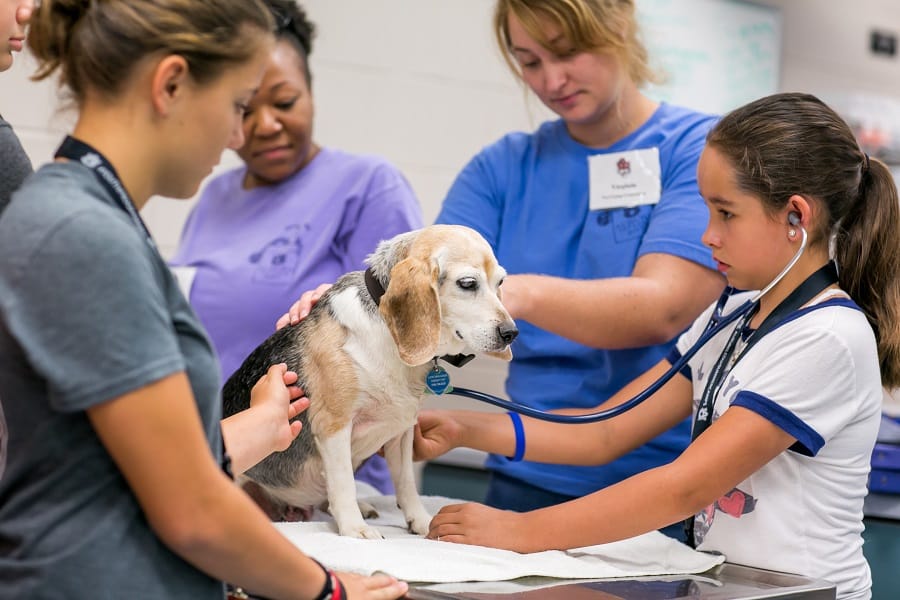
5. Talk About the Journey (Without Sugarcoating It)
Becoming a veterinarian takes:
- 4 years of undergrad
- 4 years of veterinary school
- Optional internships or specializations
- Strong science skills, study habits, and perseverance
That’s a big commitment! But instead of focusing on how hard it is, focus on how worth it it is.
Help them understand:
- Challenges are part of the process
- Mistakes don’t mean failure
- Not every vet works in a clinic—there are zoo vets, marine vets, research vets, and more
6. Foster Soft Skills, Too
Veterinarians don’t just work with animals—they work with people. Building emotional intelligence and communication skills is just as important as science.
Encourage activities that develop:
- Leadership (school clubs, scouts, debate)
- Compassion (volunteering, helping peers)
- Problem-solving (puzzles, strategy games)
- Time management (chores, schedules, study routines)
These skills will help them in school and in their future practice.
7. Remind Them Why It Matters
On tough days—whether it’s a hard test or a moment of doubt—bring them back to the why.
- “Remember how happy you were when you helped that injured bird?”
- “Think about how many animals you’re going to help someday.”
- “This dream matters because you care deeply—and that’s rare.”
Sometimes, all a young dreamer needs is a little reminder that their future is bright—even if the road is winding.
8. Celebrate the Small Wins
Did they ace a biology quiz? Finish a vet-themed book? Volunteer a whole weekend? Celebrate it.
Progress isn’t always huge or dramatic—it’s built in the little moments:
- High-fives after homework
- Encouraging notes on the mirror
- "I’m proud of you" texts after a long day
Support doesn't have to be loud—it just has to be consistent.
FAQs: Helping Aspiring Vets
Q: What age is too early to start encouraging a vet career?
A: Never too early! Kids as young as 3 or 4 can show signs of empathy and curiosity. Just keep things playful and supportive.
Q: My child isn’t great at science—should I be concerned?
A: Nope! Science can be learned over time. Focus on building curiosity and work habits. Passion often outweighs natural ability.
Q: What if my teen changes their mind?
A: That’s okay! Supporting their interests builds resilience and self-trust—even if their dreams evolve.
Wrapping It Up: Every Dream Deserves a Cheerleader
Whether they’re bandaging a stuffed animal or researching exotic species for a school project, future vets deserve encouragement, guidance, and belief.
Your support—whether you're a parent, teacher, mentor, or friend—could be the reason they keep going when it gets tough.
So say the words. Share the books. Make the connections. Cheer them on every step of the way.
Because one day, that wide-eyed kid with the stuffed animal stethoscope just might be the vet who saves someone’s best friend. 🐕🐾🩺