
Today’s offices are no longer the same as before. Now, almost every home has a compact office inside, which has become more flexible. As a result, people now expect furniture to complement their lifestyle instead of competing with it. And compact standing desks can really change your office for the better. They are small, practical, and designed for real spaces, not showroom floors.
When we refer to compact standing desks, we typically mean two main types: compact sit-stand desks and compact fixed-height standing tables. Both are designed for smaller spaces, but they serve slightly different needs. Together, they cover most modern work setups surprisingly well.
Small Spaces are the New Normal
Not everyone works in a large office with endless room for furniture. Many people work from bedrooms, shared apartments, studio flats, or hybrid offices where space is limited. A full-size desk can quickly feel overwhelming in these environments.
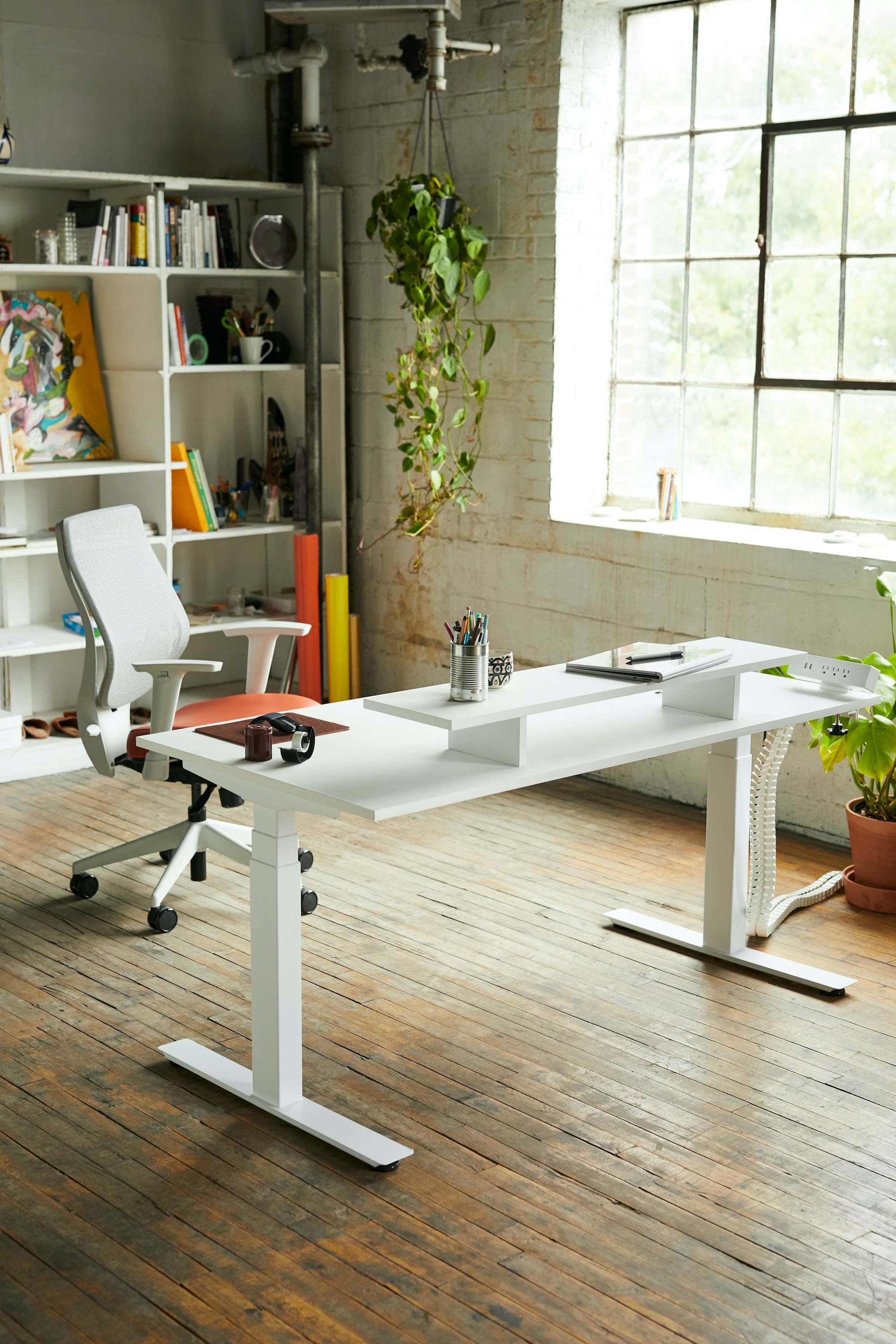
Compact standing desks from Progressive Desk solve this problem by keeping the footprint minimal. They fit into corners, next to windows, or even between existing furniture without making the room feel crowded. You still get a proper work surface, just without wasted space around it. This makes them ideal not only for home offices, but also for coworking spaces, hot-desking areas, and modern offices that prioritize flexibility over fixed layouts.
Compact Sit-stand Desks: Flexibility Without Bulk
Compact sit-stand desks are designed to move between sitting and standing positions while staying small and easy to place. They are perfect for people who want movement during the day but don’t want a large, heavy desk taking over the room.
Because the tabletop is smaller, everything you place on it has to matter. A laptop, a monitor, a keyboard, maybe a notebook – that’s it. This naturally encourages a cleaner workspace and fewer distractions.
One of the most important things is how quickly these desks can adapt. You can sit for focused tasks, stand for calls or short work sessions, and switch back without rearranging anything. Having a very small room is a challenge for home workers, but with special furniture flexibility, you will feel comfortable and confident every workday at home.
By the way, compact sit-stand desks also work well in shared environments. When many people use the same space, being able to adjust the height easily makes the desk more inclusive without needing extra furniture.
Compact Fixed-Height Standing Tables: Simple and Focused
Small fixed-height standing tables take a different approach. They are designed for standing only, with no moving parts and no height adjustments. The simplicity of this modern furniture is the key benefit it offers users. These tables are ideal for tasks that don’t require long sitting sessions: quick laptop work, planning, sketching, writing, or even short creative sessions. Because they don’t move, they tend to feel more stable and lightweight at the same time.
In modern workspaces, these tables often act as secondary desks. You might have a main sit-stand desk and a compact standing table nearby for short bursts of work. This encourages natural movement throughout the day without forcing constant posture changes. They are also easy to move around. In flexible offices or home setups that change often, a fixed-height compact table can be relocated in minutes.
Better Posture Without Complicated Setups
One of the biggest reasons people choose standing desks is posture. Compact standing desks make posture changes easier because they remove friction. You don’t need a large setup or a perfect office layout to start standing more.
With compact sit-stand desks, posture improves through variation. Switching positions reduces stiffness and keeps the body active. With fixed-height standing tables, posture improves through simplicity – stand, align your screen properly, and work. Because the desks are smaller, users are more likely to set them up correctly. Monitor height, keyboard placement, and distance from the screen are easier to manage when the desk surface isn’t overloaded.
Today’s work is mostly digital. Many people work with laptops, small monitors, or tablets. They don’t need deep desks or wide surfaces anymore. A compact standing desk matches this reality well. They support focused work rather than clutter. When space is limited, you naturally prioritize what you use every day. This leads to cleaner desks and fewer interruptions.
These models of desks also work well with modern accessories like monitor arms, laptop stands, and wireless keyboards. These tools help maximize limited space while keeping the setup comfortable.
Easy to Fit into Any Interior
A large desk often dictates how a room looks. Compact standing desks do the opposite; they adapt to the room. Whether the space is minimal, cozy, or shared with other functions, a small desk blends in more easily. In home environments, this matters a lot. A compact desk can live in a living room or bedroom without making the space feel like a full-time office. When work ends, the room still feels like home. In offices, compact desks allow better layout planning. More desks can fit into the same area, walkways stay open, and the space feels lighter and more flexible.
Ideal for Hybrid and Flexible Work
Hybrid work means people don’t always work at the same desk every day. Compact standing desks fit perfectly into this model. They are easy to adjust, easy to move, and easy to share.
Compact sit-stand desks support different users throughout the day, while fixed-height standing tables act as quick-use stations. Together, they create a workspace that supports movement and choice instead of fixed habits. This flexibility is exactly what modern workspaces need.
Less Space, More Intention
Compact standing desks are not about compromise. They are about intention. Every centimeter has a purpose. Every item on the desk earns its place.
Whether it’s a compact sit-stand desk for daily work or a compact fixed-height standing table for short sessions, these desks support how people actually work today in smaller spaces, with lighter setups, and more movement. In modern workspaces, smaller doesn’t mean less. It often means smarter.