
Best Earbuds for Everyday Use - Calls, Music, Workouts, and Travel
No pair of earbuds is best at everything. A model that sounds excellent in a quiet room may have trouble keeping your voice clear on a windy call.
No pair of earbuds is best at everything. A model that sounds excellent in a quiet room may have trouble keeping your voice clear on a windy call. Strong noise cancellation can make a crowded train easier to tolerate, yet the same earbuds may feel uncomfortable two hours into a flight. Most people use earbuds in several settings, so a specification sheet or single test score cannot fully show how microphone quality, fit, controls, and battery life hold up day to day.
For a single everyday pair, start with the situations you encounter most often, then prioritize clear calls, useful ANC, a secure fit, and battery life that lasts through your longest day. The sections that follow connect calls, music, commuting, travel, workouts, comfort, and case design to that decision. The result is a shortlist built around your routine instead of a universal ranking.
Calls and Meetings Need More Than Good Microphones
At 8:55, you connect your earbuds to a laptop for a team meeting. Ten minutes later, you put them back in your pocket, start a podcast on your phone, and head out to catch the train. That evening, the same pair may handle a call from a noisy cafe or a film during a flight. Using one pair across these moments exposes the different demands placed on calls, music, and travel.
For calls, the microphones need to pick up your voice without letting traffic, keyboard clicks, or the person at the next table take over. Speech-processing algorithms help separate your voice from that background, while microphone placement affects what the earbuds capture in the first place. Connection stability is equally easy to overlook. A brief dropout during a song is annoying. During a client call, it can derail a sentence. If you move between a laptop and phone, multipoint connection can save you from repeatedly opening Bluetooth menus.
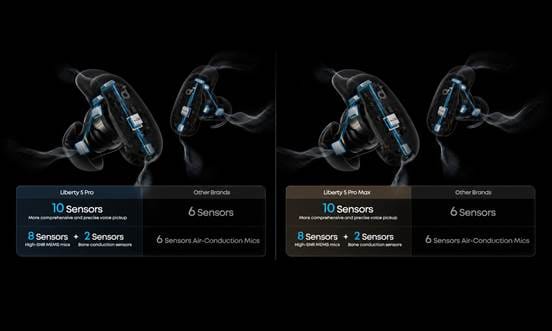
Microphone specifications matter when they explain what happens during a call. Multiple microphones, bone-conduction voice pickup sensors, and speech-processing software can help separate your voice from traffic or keyboard noise, although placement and conditions still affect the result. Independent microphone samples and connection tests are more useful than a model's position in a product lineup.
|
If you... |
Look for... |
|
Take calls outdoors |
Wind handling and voice samples |
|
Switch between a laptop and phone |
Multipoint connection |
|
Join long meetings |
Comfortable fit and natural sidetone |
The call system in the soundcore Liberty 5 Pro and Liberty 5 Pro Max is shared across both models, rather than being a Pro Max-only feature. It combines 8 MEMS microphones, 2 VPUs, and an AI Large Model for voice processing. In a busy cafe or beside a road, that combination is intended to keep speech separate from the surrounding noise. Apple, Bose, and Jabra use their own multi-mic approaches, so compare call samples and connection behavior instead of assuming a higher product tier will suit every caller.
Music and Podcasts Need Different Tuning
After work, the same earbuds may play a playlist on the train, a podcast while you cook, or an audiobook before bed. Music and spoken content put different demands on them, even when the listening session feels casual. Music benefits from clear separation and natural vocals. Podcasts place more weight on voice clarity and low listening fatigue.
Tuning determines whether vocals sound natural, bass has definition, and busy tracks remain clear. An equalizer can help adjust the sound after the first listen, while codec support matters only when your phone and streaming service use the same format. Fit still comes first. A higher-resolution codec will not make an uncomfortable earbud easier to wear or change a sound signature you dislike. If you use an iPhone, remember that iOS does not support LDAC, so check codec compatibility before treating it as a deciding feature.
|
If you... |
Look for... |
|
Listen to mixed genres |
Balanced tuning and adjustable EQ |
|
Mostly listen to podcasts |
Clear vocals and low listening fatigue |
|
Care about codec support |
Compatibility with your phone and streaming
service |
Commute and Travel Depend on More Than ANC
As a hardware reference, the soundcore Liberty 5 Pro and Liberty 5 Pro Max both use a 9.2mm Wool-Paper Diaphragm. Sony, Technics, and Sennheiser offer different tuning approaches, so treat driver design as one part of the listening experience rather than a direct sound-quality ranking.
ANC Works Best on Steady Background Noise
Active noise cancellation, or ANC, works best against steady sounds such as train rumble, aircraft engines, and office air-conditioning. Sony, Bose, Apple, and other brands make different choices around cancellation, transparency, and ecosystem features, so judge the noise you face most often.
Fit Determines the Real ANC Experience
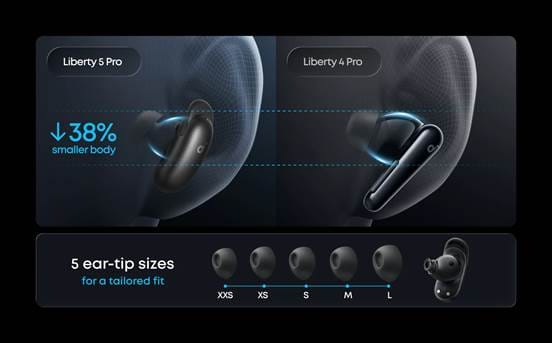
Check the seal before comparing ANC systems. A tip that is too small allows sound to leak in and can weaken bass. One that is too large may create pressure after a few minutes. Try the available sizes in each ear, since both sides may need a different fit. If bass becomes fuller when you press the earbud inward, the seal may be incomplete. Walk, talk, and move your jaw to see whether it stays secure.
Transparency Mode Helps You Switch Contexts
Transparency mode lets in outside sound for announcements, brief conversations, or traffic awareness. Some versions sound open, while others amplify wind or process voices heavily. It can help you switch context, but it does not replace paying attention to your surroundings.
Models from Bose and Sony often place ANC near the center of the experience, while Apple, Samsung, soundcore, and other brands balance it with ecosystem features, controls, fit, and price. Current noise cancelling earbuds can be compared by ANC controls and battery claims, but independent tests and an in-person fit check remain useful.
For iPhone users, third-party earbuds' own ANC still works over Bluetooth. The main limitation is at the ecosystem level, where Apple-specific features such as automatic switching and Adaptive Audio may remain tied to AirPods.
Battery Matters on Longer Trips
Battery claims usually separate listening time on one charge from total time after recharging in the case. For a long flight, the single-charge ANC figure is the harder limit. For short daily commutes, total case capacity may matter more.
Treat published figures as reference points because ANC, calls, volume, codec choice, and temperature can change runtime. Look for enough ANC-on battery life to cover your longest normal journey with some margin. Fast charging is also useful when you notice a low-battery alert shortly before boarding.
|
If you... |
Look for... |
|
Commute by train every day |
ANC and a secure seal |
|
Take long flights |
ANC-on single-charge battery life |
|
Often board with a low battery |
Fast charging and a useful case battery |
As a travel reference, the soundcore Liberty 5 Pro and Liberty 5 Pro Max both use Adaptive ANC 4.0 and list 6.5 hours with ANC enabled and 28 hours including the case. Their stated five-minute fast charge provides about four hours of use. Sony, Bose, Apple, and Jabra models can differ considerably, so compare the same ANC-on condition across products.
Workouts Depend on More Than an IP Rating
|
If you... |
Look for... |
|
Run outdoors |
Secure fit and wind handling |
|
Train indoors |
Sweat resistance and reliable controls |
|
Walk in changing weather |
A suitable IP rating and easy cleaning |
An IP rating is a useful starting point for sweat, dust, and light rain, but it does not describe the whole workout experience. The soundcore Liberty 5 Pro and Liberty 5 Pro Max both carry an IP55 rating, which covers those everyday conditions. It does not make them suitable for swimming, submersion, or rinsing under a tap. Let damp earbuds dry before putting them in the case, whose protection may be different.
Movement creates the other practical test. During a run or a set of burpees, constant readjustment is more distracting than a small battery difference. Wet fingers can also trigger touch controls, while physical buttons may push the earbuds deeper into the ear. Jabra, Sony, and other brands make different choices here, so test the fit and control motion you will actually use.
Comfort and Case Design Shape Everyday Use
|
If you... |
Look for... |
|
Wear earbuds for hours |
Low pressure and a comfortable shape |
|
Carry them in a pocket |
A compact case and easy one-hand opening |
|
Change settings without a phone |
Useful case controls or a display |
Comfort is difficult to reduce to a specification because ear shape varies. Fit affects ANC, but it also determines whether ear pressure or a hard edge becomes distracting after an hour or two. Weight, housing shape, and ear-tip size all matter in combination, so a short store demo cannot settle the question for everyone.
The charging case deserves the same everyday scrutiny. A case that fits easily in a pocket may be more useful than one with a larger battery but a bulky shape. Check whether the lid is easy to open with one hand, whether the battery indicator is clear, and whether the controls actually save you from reaching for your phone. Apple and Samsung take different approaches through their charging cases and broader device ecosystems. Compare the steps you would use every day, rather than the feature list alone.
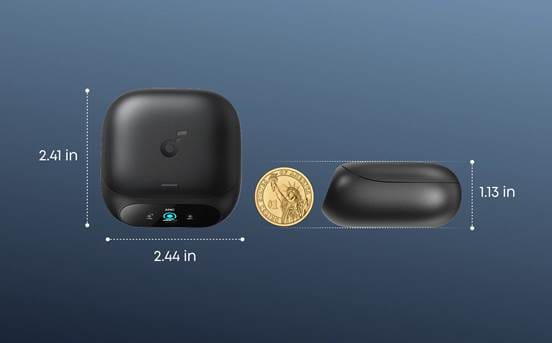
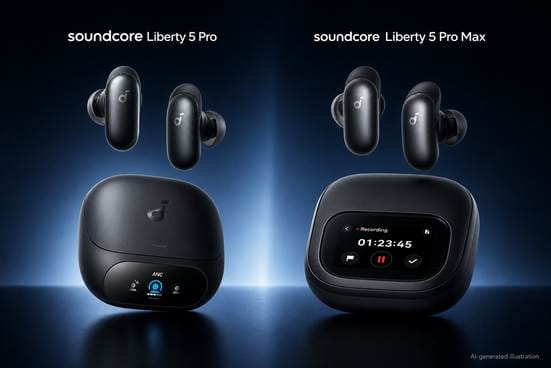
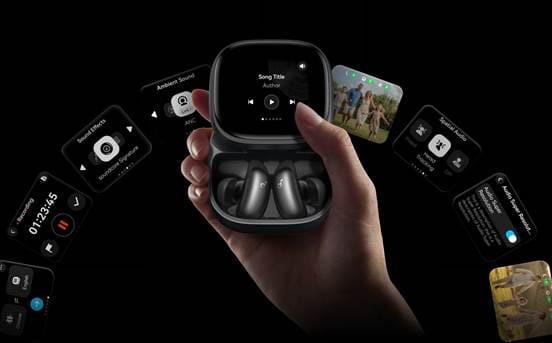
The soundcore Liberty 5 Pro uses a 0.96-inch smart display for basic controls and battery checks. The Liberty 5 Pro Max adds a 1.78-inch AMOLED touch screen and AI Note-Taker for face-to-face recording and transcription. The larger interface may help someone who changes settings or checks status away from a phone, while a simpler case may suit someone who keeps it in a pocket and rarely opens an app. Decide whether the display removes a step you actually take.
Choose One Pair Around Your Routine
Start with the situation you would find most frustrating: a weekly flight, a busy-road call, a long gym session, or an afternoon of listening. Test that compromise first.
Price can frame a comparison, but it should not decide it. As of July 2026, the listed prices were $169.99 for the soundcore Liberty 5 Pro and $229.99 for the Liberty 5 Pro Max. Promotions and regional pricing may change these figures. Sony, Bose, Apple, Nothing, and EarFun occupy other points in the market. The difference reflects the smart-case experience, not a guarantee of a better fit.
|
Your routine |
Prioritize first |
Check second |
|
Remote work and frequent calls |
Voice pickup, call-noise reduction,
multipoint |
ANC-on battery, comfort, sidetone |
|
Commuting and travel |
ANC, fit, transparency mode |
Case battery, fast charging, compact case |
|
Gym and outdoor walks |
Secure fit, suitable IP rating, simple
controls |
Wind handling, comfort, battery |
|
Music and podcast listening |
Sound tuning, EQ options, fit |
Codec support, ANC, app usability |
|
One pair for everything |
Balanced calls, ANC, comfort, battery |
Multipoint, IP rating, case design |
Use the table to set two or three priorities, then test them directly:
Remote work. Check call samples recorded in traffic, a cafe, or wind. Test multipoint on your laptop and phone.
Travel. Match ANC-on runtime to your longest journey. Read long-session comfort comments and test transparency mode outdoors.
Workouts. Treat shake tests as a rough clue. Check the exact IP rating, control customization, and available tip or stability options.
Music and podcasts. Start with tuning and fit, then check EQ and codec support. Confirm features for the exact model.
Once you have two or three priorities, build a short list. Category pages for wireless earbuds and independent reviews can help. Check replacement tips, app compatibility, control customization, and the return policy before deciding.
The best earbuds for everyday use rarely win every individual test. The better match is the pair that handles your most important moments without creating a new irritation somewhere else. Excellent ANC loses some of its value with a painful fit. Detailed sound cannot rescue unreliable calls. A large case battery still leaves you without music if the earbuds run out halfway through a flight.
Choose around the scenario you cannot afford to compromise, then assess call behavior, ANC, battery life, fit, water resistance, controls, and case design. Independent tests are especially useful for microphone quality, wind handling, and long-session comfort.
Your routine can still point to a clear choice. A focused short list, a realistic trial, and a sensible return policy will tell you more than any single headline score.
Can one pair of earbuds really handle calls, music, workouts, and travel?
A single pair can cover several routines when its main features are reasonably balanced. Start with the situation that matters most, then check whether the same pair is comfortable and reliable enough for your other regular activities. If one use case has unusually demanding requirements, a specialized pair may still make more sense.
What should iPhone users check before choosing wireless earbuds?
Check whether the companion app supports the EQ, firmware updates, battery information, and control mapping you plan to use. Multipoint behavior can vary across a phone and laptop, so test those devices together. Codec support is a compatibility detail, not the main reason to choose a pair.
Is multipoint connection worth paying attention to?
It is useful when you regularly move between a work laptop and a personal phone. Check whether both devices stay connected, how incoming calls interrupt playback, and how quickly the earbuds reconnect after one device goes idle. If you use one source, multipoint may add little.
What does a smart charging case add?
A screen or touch interface can make battery checks and basic controls easier without opening an app. The benefit depends on how often you use those controls. AI note features also need a specific use case, especially when they record face-to-face conversations rather than internal audio from online meetings.
When is it worth paying more for premium earbuds?
A higher price makes sense when it adds a feature you will use often, such as stronger ANC, better call processing, longer ANC-on battery life, or a smart charging case. It is harder to justify when the extra cost mainly buys specifications you will rarely notice. Compare the feature that changes your routine, rather than the product tier alone.
|
Disclaimer: |


