

Let’s be real—choosing the right battery doesn’t usually top anyone’s list of exciting decisions. But once you’ve dealt with the headaches of a battery that dies too soon, weighs a ton, or takes forever to charge, you start to appreciate the difference a good one can make. I’ve been there.
So, here we are: the age-old debate (okay, maybe not age-old, but it’s definitely getting more attention lately)—should you go with a 12V lithium battery or stick to the classic lead-acid type?
They’re both useful, but for different reasons. The trick is figuring out what you actually need. In my experience, 12V lithium batteries are just on another level. They’re light, last longer, charge faster, and barely need any attention.
We’re talking over 2,000 charge cycles versus around 500 for lead-acid. Not to mention, they don’t throw a fit when it gets too hot or cold. But hey, that’s just my two cents—let’s break it down so you can decide for yourself.
What Makes 12V Lithium Batteries Different from Lead-Acid Alternatives?
There’s a whole list of reasons why someone might lean toward lithium, especially in the 12V department.
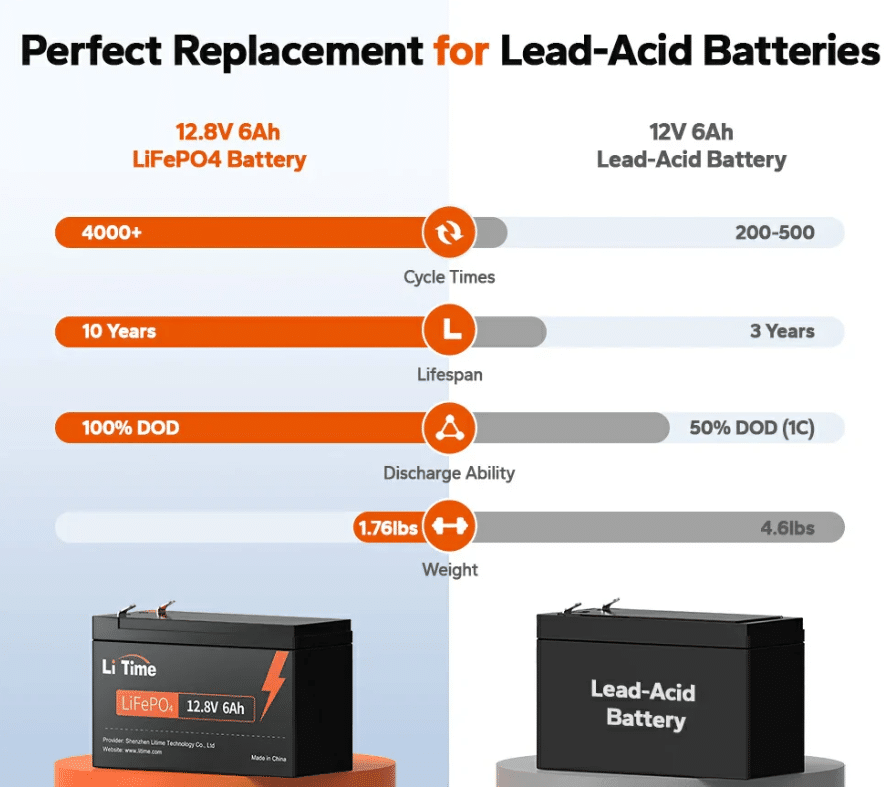
- Weight: Lithium batteries are, hands down, way lighter. We’re talking about a 30–50% drop in weight. That’s not a minor detail—it’s a back-saver.
- Lifespan: You’ll get over 2,000 cycles out of a lithium battery. With lead-acid? Maybe 500, if you’re lucky and treat it well.
- Efficiency: Lithium batteries are like the fast-charging coffee of the battery world. They hit 90% in about an hour, while lead-acid lumbers along for 8 hours or more.
- Temperature Resilience: Ever try to get a lead-acid battery to cooperate in freezing temps? It’s not pretty. Lithium can handle a broader range—from -4°F up to 140°F.
- Maintenance: This is a big one for me—lithium batteries don’t need babysitting. No topping off fluids. No fiddling. They just work.
Bottom line? Think about how and where you’ll use it. Hauling gear into the woods for a weekend? RVing across state lines? Powering a backup system at home? The answer might point you toward one or the other.
Weight and Space Efficiency
Let me tell you, the first time I swapped out a lead-acid for a LiTime lithium battery, I was shocked—literally almost dropped it because I expected it to be heavier. That weight savings is no joke.
Lithium Batteries
A 12V lithium battery usually weighs in around 20 pounds and has a pretty compact form, something like 7 x 6.5 x 6.5 inches. That makes installation easier and opens up options in tight spaces. Boats, camper vans, small solar setups—you name it.
Lead-Acid Batteries
Now, the lead-acid alternative? You’re lugging around 40 to 60 pounds and using up more space (about 12 x 8 x 8 inches, give or take). It’s bulky, it’s heavy, and it doesn’t exactly play nice with mobile setups. So, ask yourself: how much lifting do you really want to do?
Energy Density and Performance
This part’s a bit nerdy, but stick with me—it really matters.
Lithium Batteries
Lithium packs more energy into less space. You’re getting around 150 Wh/kg. That’s a fancy way of saying it holds more juice without bulking up.
And with more than 2,000 cycles in its life, it’s kind of like the marathon runner of batteries. It keeps going and going... and going.
Lead-Acid Batteries
Lead-acid? Let’s just say it’s more of a sprinter. Energy density ranges from 30–50 Wh/kg, and after 500 cycles, it starts losing its steam. It also takes way longer to charge—8 to 12 hours is typical.
For some people, that’s no biggie. But if you’re running a solar setup or relying on it daily, that downtime gets old fast.
Charging Efficiency and Maintenance
This one hits close to home. I used to dread charging days, mostly because lead-acid batteries are just so slow. And messy.
Lithium Batteries
With a 12V lithium battery, I’m usually good to go in 2 to 5 hours. No mess, no maintenance, no mystery. And once it’s in, I can mostly forget about it. That alone is worth the upgrade for me.
Lead-Acid Batteries
Lead-acid, by contrast, demands attention. Keep an eye on water levels. Watch for corrosion. It’s like owning a pet you didn’t ask for.
Lifespan and Cost Considerations
Okay, let’s talk money. Because while performance is great, nobody wants to break the bank.
Lithium Batteries
Yes, lithium costs more upfront—$500 to $1,200, depending on the brand and capacity. But over time? You’ll replace it way less often. That adds up. Fewer replacements, fewer headaches.
Lead-Acid Batteries
Lead-acid batteries look like a steal at $150 to $300—until you realize you’ll probably need to replace them three or four times during the life of one lithium unit. And don’t forget the maintenance time, which, if you value your weekends, is not free.
Environmental Impact
Nobody wants to think about batteries ending up in landfills—but it happens.
Lithium Batteries
Lithium has a lighter environmental footprint, both literally and figuratively. It lasts longer, weighs less (so transport emissions are lower), and is increasingly recyclable. Some areas even have solid programs in place—worth looking into.
Lead-Acid Batteries
Lead-acid batteries, on the other hand, are filled with—you guessed it—lead. That stuff’s no joke when it leaks. And while they are technically recyclable, it’s still risky business if mishandled.
Safety and Reliability
Honestly, I care a lot about this one, especially if there’s gear or people depending on the battery.
Lithium Batteries
Most 12V lithium batteries come with built-in safety features like BMS. They’re smart enough to prevent overcharging, overheating, and general battery drama. They’re less likely to catch fire, leak, or cause a scene.
Lead-Acid Batteries
Lead-acid batteries can leak acid, emit hydrogen gas during charging, and get dangerously hot. They work, sure—but they’re a little old-school when it comes to safety features.
Practical Applications and Compatibility
So, where do these batteries actually fit in?
Lithium Batteries
12V lithium batteries are ideal for RVs, electric bikes, solar systems, or any setup where weight, charging speed, and longevity matter. Once you’ve used one, it’s hard to go back.
Lead-Acid Batteries
If you just need a budget-friendly option for a generator backup or traditional car battery, lead-acid still holds up. Just know what you’re signing up for.
Conclusion
In the great battery showdown, the 12V lithium battery takes the lead in nearly every category—lighter (20 lbs vs. 40–60), longer-lasting (2,000+ cycles vs. ~500), faster to charge (2–5 hours vs. 8–12), and lower maintenance. It’s a serious upgrade.
But it’s not for everyone. That initial cost? It’s not nothing. If you’re using a battery now and then, or cost is your #1 concern, lead-acid might still be a solid option.
At the end of the day, it comes down to what you need it for, how often you’ll use it, and whether you're okay paying a little more up front to save a lot of time and hassle later.