
From Scan To Smile: Guide To Digital Full-Arch Implant Planning
Learn how digital dental implant planning uses 3D imaging, scans and CAD/CAM technology to help plan full-arch implant treatment and restorations.

Digital full-arch implant treatment is often easier to understand when viewed like a building project. Before construction begins, the team develops a plan that considers the foundation, layout, appearance, and practical use of the finished structure.
In dentistry, that plan can connect 3D images, digital scans, bite records, and the intended design of the replacement teeth.
Key Takeaways
- Digital implant planning brings together examinations, imaging, scans, bite records, and restorative goals.
- In full-arch treatment, the planned teeth should guide implant placement rather than be treated as an afterthought.
- CAD/CAM technology can support the design and fabrication of custom implant-supported restorations.
- Software and artificial intelligence can assist planning, but they do not replace professional clinical judgment.
- Long-term success also depends on materials, hygiene, maintenance, and clear communication with the dental team.
Patients exploring advanced dental technology can see how OneSolution Dental Implant Centers describes its approach to digital smile design, CAD/CAM workflows, in-house laboratory coordination, and zirconia implant restorations. With offices serving Broward, Palm Beach, Miami, and Orlando, the practice presents useful examples of how specialized laboratory technicians and digital production tools may be integrated into full-arch care. Still, the right technology and treatment approach should always be based on an individual clinical evaluation.
What Digital Implant Planning Means
Digital implant planning is the process of using computerized records to help evaluate treatment before surgery and restoration. A dental team may combine clinical findings with a virtual model of the mouth and jaw to consider where implants may fit, how the teeth should meet, and how the final smile may support speaking and chewing.
The key principle is prosthetically driven planning. In plain language, the desired teeth help inform the implant plan. This does not guarantee a particular result, and plans may change when the clinician evaluates bone, gum tissue, healing, or surgical conditions. It does, however, give the team a shared framework before treatment starts.
The Records Used In A Digital Workflow
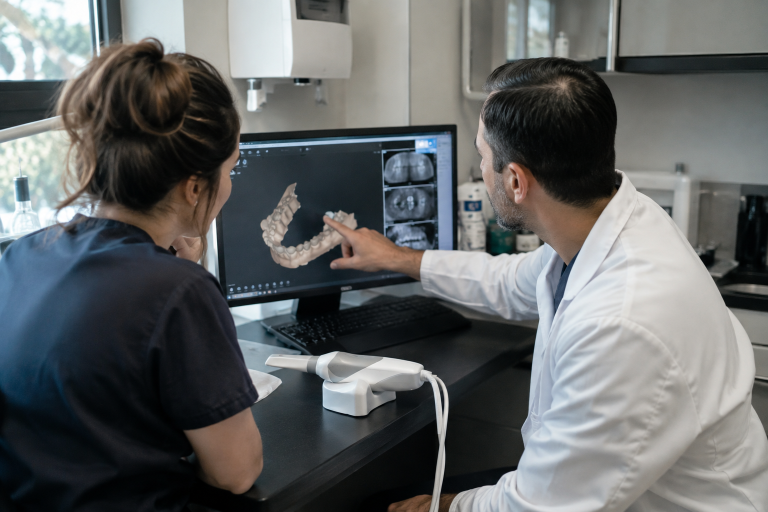
A complete workflow usually relies on more than one record. The dentist may review medical and dental history, perform an examination, take conventional dental images when appropriate, and use cone-beam computed tomography to view three-dimensional anatomy. An intraoral scan can create a digital model of the teeth, gums, dentures, or temporary restoration.
Facial photographs, bite records, existing dentures, and diagnostic models can also be valuable. Digital information is most useful when it answers a clinical question. More scans or more software do not automatically yield a better plan, so imaging should be selected based on the patient's needs.
Why Full-Arch Cases Need Careful Planning
Replacing an entire upper or lower arch involves more than placing several implants. The team must consider bite balance, tooth position, speech, chewing function, facial support, gum shape, and the patient's ability to clean around the restoration. Surgical and restorative decisions are closely connected in these cases.
The digital workflow described by the American College of Prosthodontists highlights how clinical assessment can be integrated with digital records to plan full-arch rehabilitation. A temporary restoration may also help test tooth length, lip support, appearance, and bite before the final prosthesis is made.
How CAD/CAM Supports Implant Restorations
Computer-aided design and computer-aided manufacturing, often called CAD/CAM, help convert records into a restoration design. The software can be used to shape the teeth, establish contacts between upper and lower teeth, and plan the restoration around implant components. Milling machines and 3D printers may then be used to manufacture certain dental components or prototypes.
Digital production does not remove the human role. Dentists and dental technicians still review fit, bite, contours, appearance, and patient comfort. For example, a patient may need adjustments to tooth length, bite height, or lip support before the team moves from a temporary design to a final restoration.
Choosing Materials For Implant-Supported Teeth
Full-arch restorations can be fabricated from various materials and designs, including acrylic-based restorations, composite restorations, metal-supported restorations, and zirconia restorations. Each option involves trade-offs in appearance, strength, repairability, weight, cleaning needs, cost, and the material's interaction with the patient's bite.
- Acrylic and composite options may be easier to modify or repair in some situations.
- Metal-supported designs can provide structural support within a prosthesis.
- Zirconia is commonly used for its strength and tooth-like appearance, but it is not automatically the best choice for every patient.
A dental laboratory is important because a restoration must withstand daily chewing forces while remaining comfortable and aesthetically appropriate. The best material choice depends on factors such as grinding or clenching habits, available space, implant position, access for hygiene, and the maintenance plan.
Where Technology Stops, And Clinical Judgment Begins
Software can organize information and help visualize options, but it cannot fully account for every health and lifestyle factor. Clinicians must evaluate gum health, bone quality and volume, bite forces, medications, tobacco use, home care habits, and the patient's ability to attend follow-up visits.
Artificial intelligence may assist with tasks such as identifying landmarks or producing a preliminary plan. However, reporting on AI-assisted implant planning reinforces the central point that clinician supervision remains necessary. Patients can ask who reviews the plan, how it is verified before surgery, and what happens if the clinical situation requires a change.
Questions To Ask Before Treatment
- What imaging and digital records will be used, and why?
- How will the proposed teeth influence implant placement?
- Who will design the temporary and final restorations?
- Which materials are being considered for my case?
- How will the team check the fit, bite, appearance, and access for cleaning?
- What factors could affect healing or the treatment timeline?
- What repairs, adjustments, and maintenance might be needed later?
A Simple Patient Preparation Checklist
- Bring a current list of medications, medical conditions, and previous dental treatment.
- Discuss clenching, grinding, smoking, and challenges with oral hygiene.
- Request a written treatment plan, estimated timeline, and explanation of expected stages.
- Review the proposed temporary teeth and final restoration design.
- Ask about cleaning tools, recall visits, repairs, fees, and financing before treatment begins.
Final Thoughts
Digital tools can make complex implant treatment easier to visualize and coordinate, but they are only one part of good care. Careful diagnosis, skilled surgery, thoughtful restorative design, quality laboratory work, clear communication, and ongoing maintenance all matter. A qualified dental team should be able to explain how each step supports both the immediate result and long-term function.