Saving Money on Home Repairs: Preventative Strategies
Learn how preventive home maintenance can help reduce costly repairs with seasonal inspections, water damage prevention, DIY tips, and repair budgeting.

Small home maintenance tasks can prevent minor wear from turning into expensive repairs. A loose shingle, slow drain or damp basement corner may seem easy to postpone, but each can signal a problem that grows with time. A simple maintenance schedule helps you catch trouble early, plan service costs and protect the parts of your home that are hardest to replace.
The True Cost of Deferred Maintenance
Deferred maintenance often creates a chain reaction. A clogged gutter can overflow, soak exterior trim and direct water toward the foundation. What began as routine cleaning may then require wood replacement, mold treatment or drainage work.
Delays can also limit your options. If an aging appliance fails unexpectedly, for example, you may need to accept the first available replacement instead of comparing prices. Establish a monthly home fund and treat it like a regular bill. These home maintenance budgeting tips can help you separate predictable upkeep from emergency repairs. Keep the money in an accessible savings account so you can respond promptly without disrupting essential family expenses.
Spotting Early Warning Signs
Walk through your home once a month and look for changes. Water stains, peeling paint, warped flooring and musty odors deserve attention, even when the affected area is small. Outside, check for sagging gutters, damaged siding, standing water and cracks that have widened since your last inspection.
Seasonal checks are useful after heavy rain, strong winds or freezing weather. Clear drainage channels and confirm that downspouts release water away from the house. If debris is packed into hard-to-reach areas or water continues to spill over the edge, professional gutter cleaning services can remove the buildup and test the downspouts. Take dated photos during each inspection so you can tell if a stain, crack or damaged section is changing.
Protecting Your Roof and Foundation
Your roof and foundation form the home’s main defense against water, so problems in one area can affect the other. Inspect the ground after a storm. Water should move away from the house instead of pooling near basement walls or the concrete slab. Keep soil graded away from the structure and extend short downspouts when runoff lands too close to the foundation.
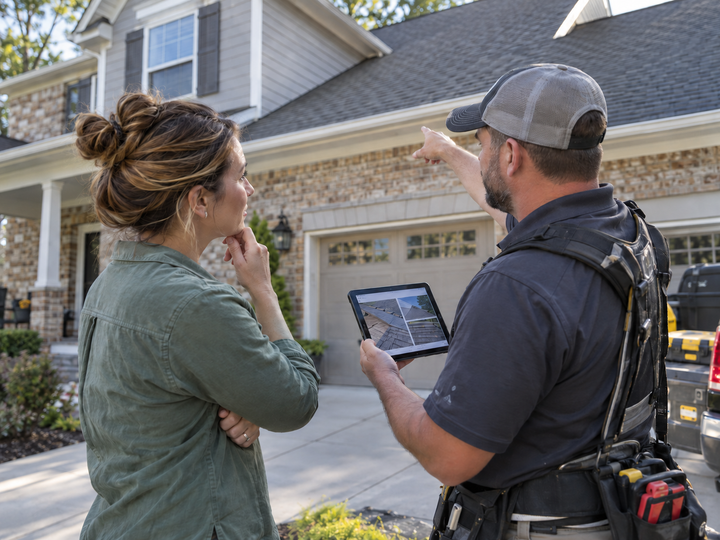
From the ground, look for missing roofing material, uneven rooflines and dark streaks near edges. Inside, inspect the attic for damp insulation or daylight entering through gaps. Never climb onto a wet or steep roof. This guide to early roof damage explains which warning signs may require prompt attention before a leak reaches ceilings and walls.
DIY vs. Professional Services
Handle low-risk tasks yourself when you have the proper tools and can work safely. Replacing accessible air filters, applying fresh caulk around a sink and cleaning ground-level drain covers are reasonable jobs for many homeowners. Stop if the task involves heights, hidden moisture, electrical components or structural movement.
Call a qualified professional when the cause is unclear or the repair could affect several systems. A recurring ceiling stain might come from roofing, plumbing or condensation and covering the mark won’t solve the source. Request written estimates that explain the work, materials and cleanup. For larger projects, compare at least two estimates and ask how the contractor will protect surrounding surfaces. Save invoices and photos because they create a useful maintenance history for future service calls or a home sale.
Long-Term Savings for Your Family
Set up a calendar that matches maintenance to the seasons. Spring and fall are good times to inspect exterior drainage, roofing and seals around doors or windows. Check cooling equipment before hot weather and heating equipment before temperatures drop. Manufacturer instructions should determine how often filters and other replaceable parts need attention.
Your savings target will depend on the home’s age, size and condition. Guidance on annual repair savings can provide a starting point, but older roofing, plumbing or heating systems may justify a larger reserve. Review upcoming needs each year and rank them by safety, water risk and potential damage. When the next heavy rain arrives, clean gutters and documented roof checks will matter far more than a rushed emergency call.