4 Lazy Home Upgrades To Automate Family Life
Learn how family home upgrades can eliminate your daily friction. Setup smarter storage. Build logical drop zones. Find helpful family home upgrades today.

Four targeted home upgrades, including smarter storage access, adaptable living room furniture, a dedicated drop zone, and easy-clean surface choices, can eliminate the daily friction points that eat up time in a busy household without requiring a renovation.
These aren't tech-heavy smart-home projects. They're one-time structural decisions that make the right behavior the easiest behavior, allowing your home to do more of the organizing work for you.
According to data from the National Association of Professional Organizers, the average American spends roughly 55 minutes per day searching for misplaced items, which adds up to over six hours a week of recoverable time.
Here's where to start.
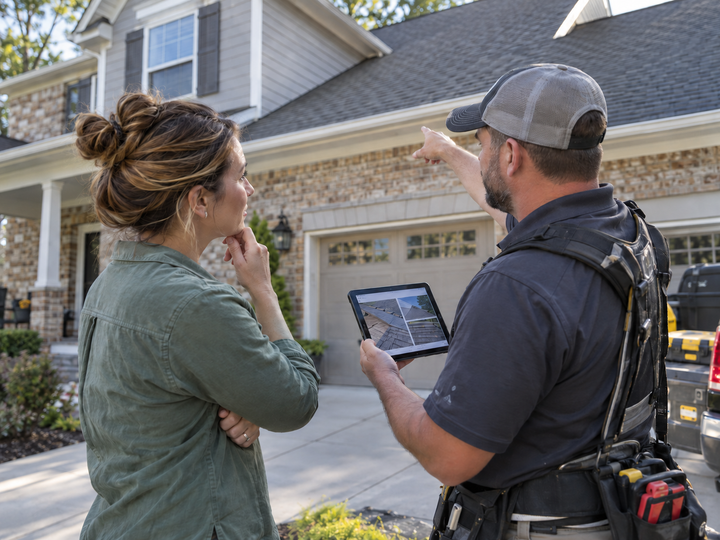
1 Smarter Storage Access for Seasonal Gear
Picture mid-November when the holiday bins are somewhere in the attic or stacked six-deep on a garage shelf.
Getting to them means moving everything else twice, and then they sit on the floor for three weeks because returning them feels like an obstacle course.
This represents an access problem rather than a lack of bins.
Overhead and attic space remains the most consistently underused square footage in most homes.
A standard two-car garage typically offers eight to ten feet of ceiling clearance, which translates to massive vertical storage capacity. When that space proves hard to reach safely, it stays empty while floor space disappears under seasonal clutter.
Purpose-built solutions address overhead storage directly by making vertical retrieval safe instead of a dangerous balancing act.
For families ready to invest in a structural fix, options like Inventive Garage's attic stairs are worth exploring. They are designed specifically to make overhead access highly repeatable compared to improvised physical workarounds.
Before lifting anything into the rafters, group seasonal items by category into clearly labeled bins.
Retrieval next October will take ten minutes instead of a full garage excavation. Always follow manufacturer weight limits and mount hardware directly into joists to keep load distribution safe over time.
2 Living Room Furniture That Adapts to Your Family
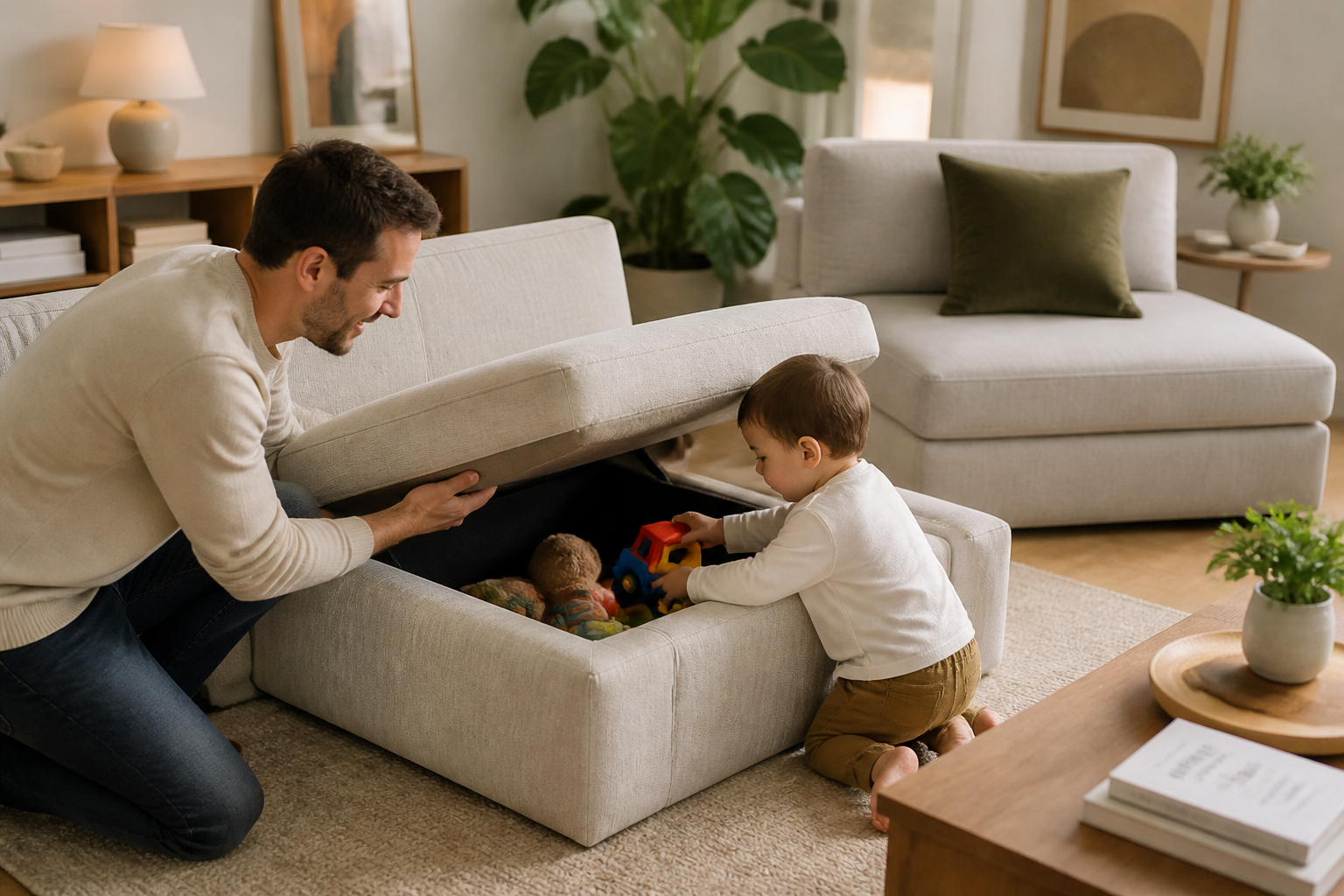
Alt: Father and child playing with toys in a cozy room
The dog claimed one cushion, someone spilled juice on another, and standard seating simply cannot handle the reality of daily household traffic.
Traditional sofas originate as showroom display pieces rather than tactical tools for households with kids and pets.
A functional living room requires a setup where the furniture handles spills as a basic laundry task instead of a permanent stain crisis.
Modular seating featuring washable covers means a serious spill goes directly into the washing machine.
Built-in seat storage holds blankets, television remotes, and charging cables directly out of sight. Home Reserve's modular couch is one option built around this practical logic, utilizing replaceable parts and hidden compartments under every seat cushion.
This configuration directly cuts the specific number of stray items that end up scattered across the floor every evening.
Replaceable fabric components extend the furniture's usable lifespan through a new baby or a room redesign without forcing a full replacement.
Choosing tight-weave, stain-resistant upholstery also significantly reduces the daily pet-hair maintenance loop on the furniture surfaces.
3 A Drop Zone That Works the Moment You Walk In
Two backpacks sit on the floor while jackets pile up on the stair rail because there is nowhere obvious to stash outdoor gear.
A functional drop zone assigns every specific category of item a fixed spot at the entry so putting things away becomes highly automatic.
One assigned hook per person serves as the primary design principle, since individual assignments remove the daily micro-decision about which placement is correct.
According to Pew Research Center, U.S. adults spend roughly two hours daily doing scheduled housework. Reclaiming some of that time starts purely with containing the mess before it travels into the main living areas.
A shallow tray or small bowl placed exactly at eye level handles keys and incoming mail automatically.
Shoe storage at floor level can take the form of a low bench with cubbies or an individual labeled basket per child.
A bench with lift-up storage underneath provides extra capacity for cold-weather accessories without adding visual clutter to the entrance corridor.
Maintaining the entry structure requires small household habits rather than constant tidying.
A few practical details keep the drop zone system working smoothly over time:
- Keep the zone intentional, since a drop zone overloaded with gear stops functioning as a system and becomes another pile.
- Place a washable rubber mat just inside the door to contain tracked-in dirt and simplify floor mopping.
- Label hooks or baskets by name, especially for younger children who respond much faster to personal ownership than a generic noun.
Installing these components requires a standard stud finder and a power drill for roughly thirty minutes of active work. Minor organizing replaces extensive construction, making this a highly realistic Saturday morning project.
4 Design Spaces for Faster Cleaning
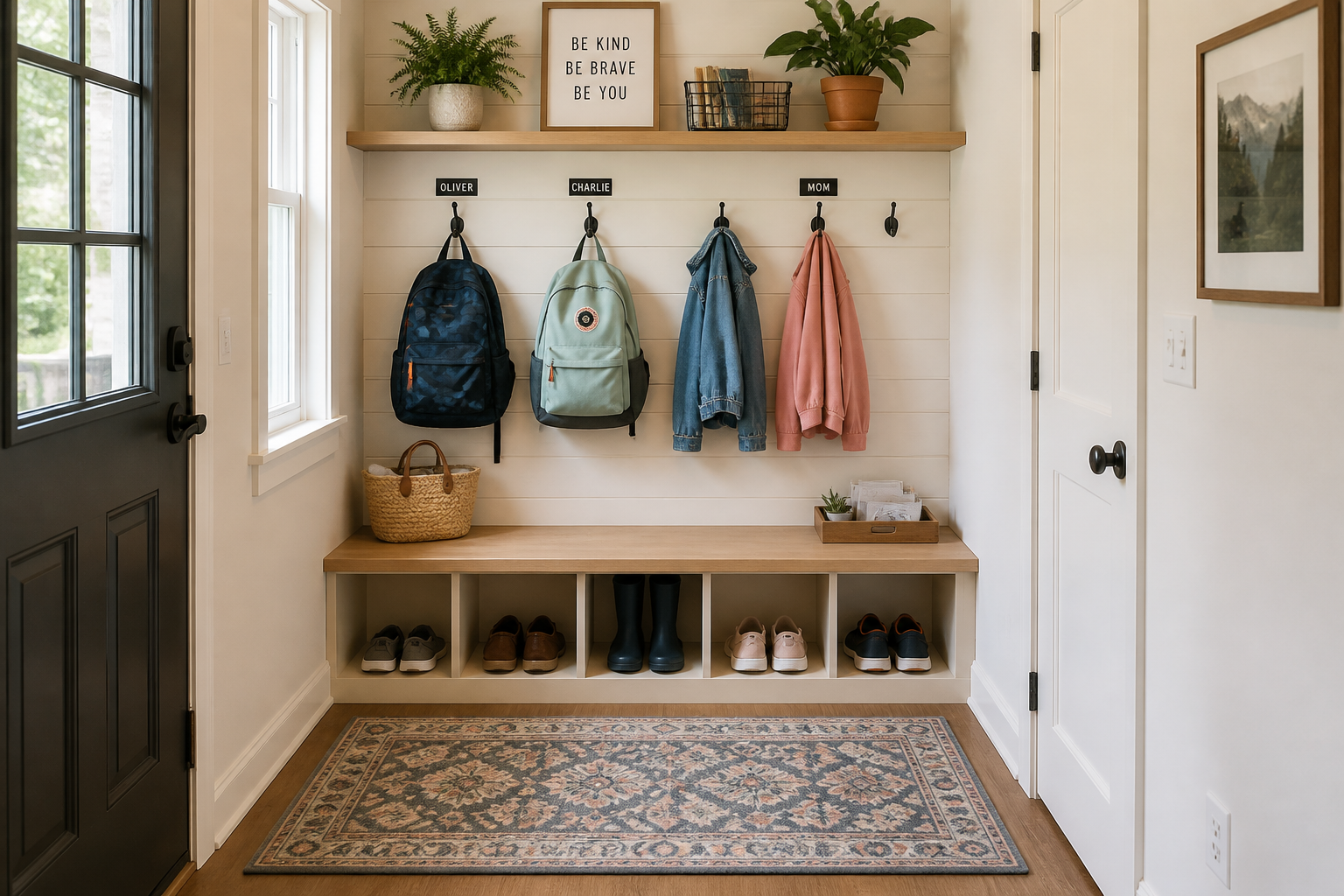
Alt: Organized entryway with hooks, backpacks, jackets, and labeled cubbies
Sweeping the kitchen floor often feels pointless when the carpet traps deep crumbs and horizontal surfaces collect loose clutter by dinner.
Designing the entire house for easier cleaning represents a one-time decision with heavy, compounding daily payoffs.
Specific room material choices determine exactly how fast a shared space re-clutters and how long each maintenance pass actually takes.
Research highlights this frustrating time block, showing Americans commit around six hours weekly to cleaning their homes. Hard flooring like luxury vinyl plank or sealed concrete sweeps clean in one swift pass.
This contrasts noticeably with typical carpet styles that require multiple vacuum passes yet still trap fine debris deep inside the fibers.
Choosing furniture featuring raised legs allows a vacuum wand to slide underneath without moving heavy couches, effectively eliminating hidden dirt buildup at the baseboards. Fewer open horizontal surfaces mean fewer available landing zones for random objects.
These minor adjustments prevent dirt from accumulating in hard-to-reach areas.
A few additional one-time interior choices compound the overall cleaning effect:
- Washable paint finishes: Eggshell or satin finishes applied on high-traffic walls wipe clean without scuffing the paint.
- Tight-weave rugs: Patterns featuring medium tonal variation hide muddy paw prints between cleaning sessions and are far easier to successfully vacuum than looped pile.
- Closed storage cabinets: Household items stored behind solid doors avoid collecting visible dust layers and require zero decorative styling effort.
Your Next Steps
Targeted home improvements directly shift the heavy burden of organization from daily discipline to structural design.
Upgrading your garage layout with purpose-built attic stairs makes retrieving large seasonal items a safe and repeatable process.
Over in the living room, utilizing modular washable seating accommodates children while effectively hiding random daily clutter inside the frame.
Assigning a dedicated entry hook for every single family member stops thick winter gear from migrating into the kitchen. Replacing high-maintenance household materials with wipeable surfaces ultimately cuts down the specific hours spent managing trapped dust.